Home › Outdoor Living Masonry
We build outdoor masonry features in Salt Lake, UT that turn your yard into a comfortable living space. Our team installs patios, steps, seat walls, fire pits, and outdoor kitchens using brick, stone, and pavers. Enjoy a customized outdoor area that is durable, low maintenance, and inviting.
Superior Masonry Salt Lake provides professional outdoor masonry features throughout Salt Lake, UT, Utah and the surrounding area. Our licensed, insured crew delivers safe, clean, on-time work with a free estimate before anything begins. Call (385) 243-7505 or request your free quote.
Outdoor masonry features built for how Salt Lake really lives outside
Outdoor living in Salt Lake is not the same as in warmer, flatter cities. We get freeze-thaw cycles, snowmelt running across patios, hot sun on vertical walls, and a long shoulder season where fire features actually get used. Superior Masonry Salt Lake designs and builds outdoor masonry features around those realities, so your patio, kitchen, or fire pit does not heave, crack, or stain after a couple of winters.
When we talk about outdoor living masonry, we mean permanent features in block, brick, stone, and concrete that stay put and work hard: patios, sitting walls, grills and kitchen islands, fireplaces, fire pits, pizza ovens, decorative seat walls, and integrated planters. We start by asking how you actually use your yard. Do you host big family cookouts, need a quiet corner for two chairs, or want a kid-friendly fire pit where sparks are controlled? Those answers drive the layout, height of walls, size of hard surfaces, and clearances for cooking areas.
Most projects in Salt Lake also have to deal with slopes and drainage. We look at how water currently moves across your yard, how snow will pile and melt, and what existing concrete or decks we need to tie into. That on-site evaluation is the difference between a patio that drains cleanly to a landscape bed and one that sends meltwater against your foundation all winter.
Common outdoor masonry features we build in Salt Lake
Superior Masonry Salt Lake can handle nearly any permanent outdoor feature in brick, block, or stone. The most common projects we build include:
1) Patios and gathering areas: Concrete pavers, natural stone, or stamped and colored concrete laid over a compacted base. We size patios so furniture actually fits, leaving room for walk paths around tables and grills.
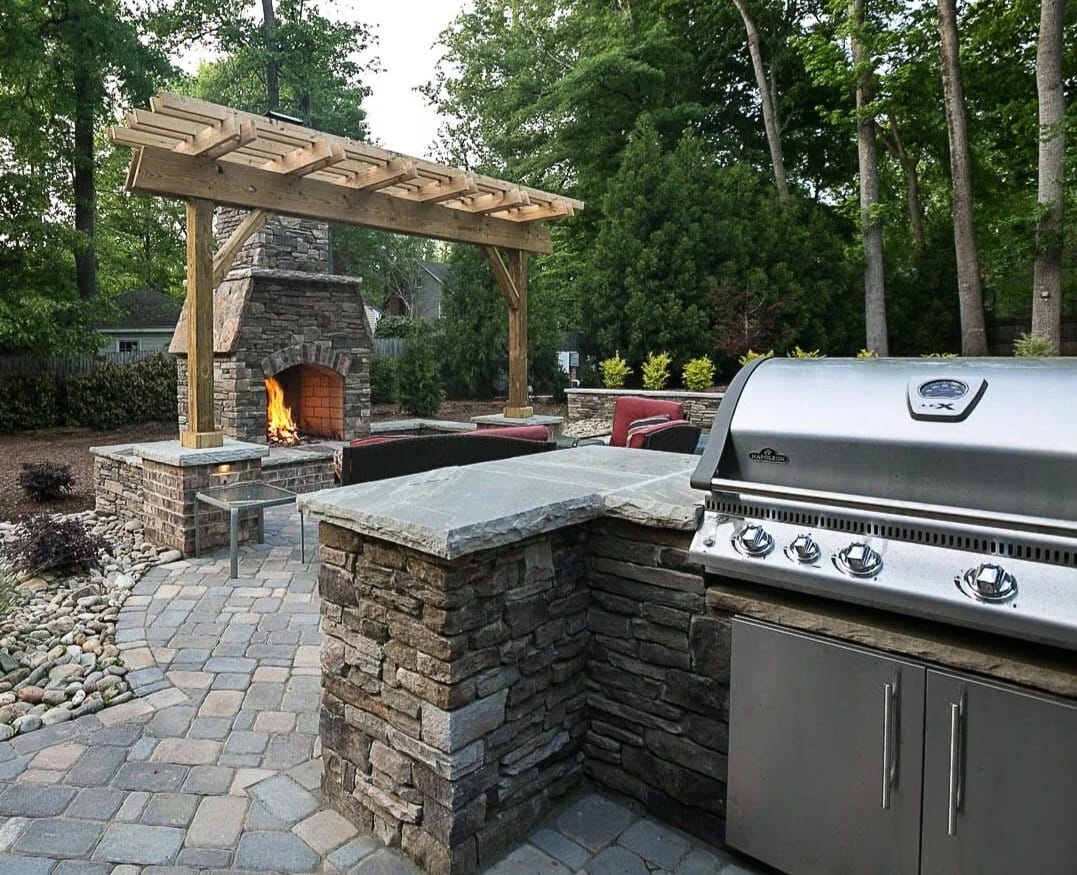
2) Fire pits and outdoor fireplaces: Gas or wood-burning units built to code, with proper clearances to structures, trees, and property lines. We pay close attention to prevailing wind in your neighborhood so smoke does not blow across seating areas or into your home.
3) Outdoor kitchens and grill islands: Masonry shells built to accept your specific grill, side burner, fridge, and storage. We coordinate gas and electrical rough-in locations with your plumber or electrician, or bring in licensed partners if you prefer a single point of contact.
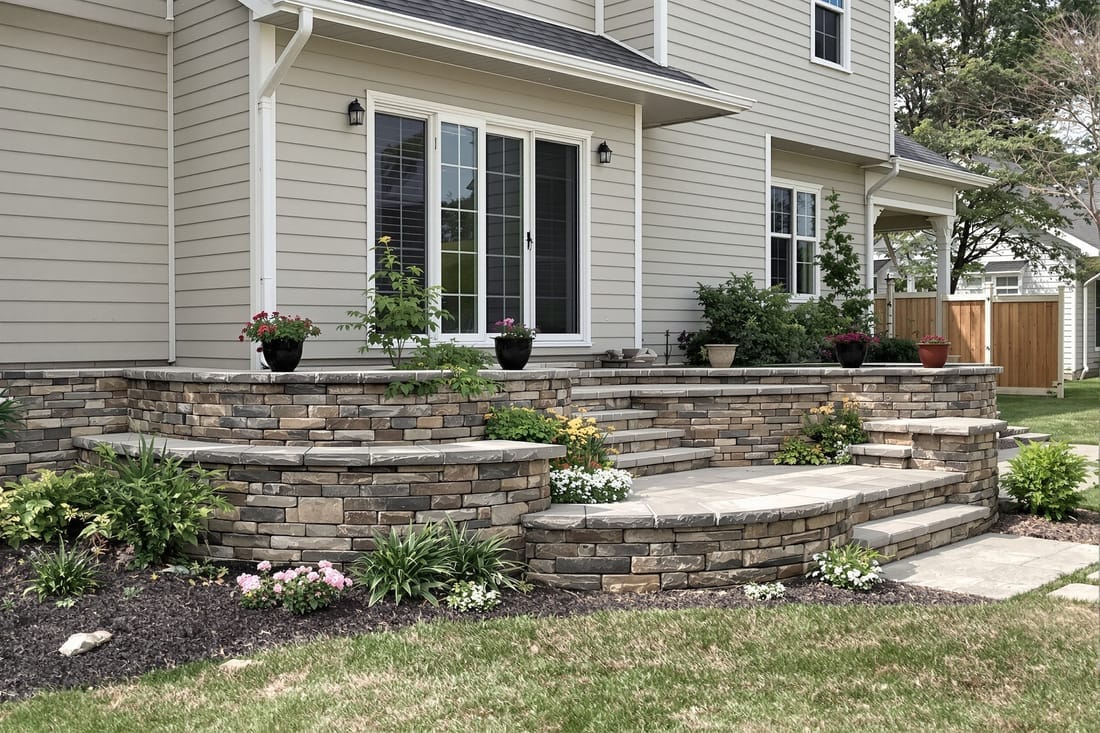
4) Seat walls and retaining walls: Low walls that define spaces and add permanent seating, plus functional retaining walls where the yard changes elevation. We often combine a small retaining wall with a higher backrest wall so you gain seating and slope control in one move.
5) Masonry steps and transitions: Steps from a back door down to a patio, stairways along a side yard, and transitions from existing balconies or decks. We set consistent riser heights and tread depths so the stairs feel natural to walk in winter boots.
On many Salt Lake properties, the best outdoor living design is a combination of these pieces. For example, a paver patio that ties into a brick outdoor kitchen, with a curved seat wall around a gas fire pit and a few integrated planters to hide a neighboring fence.
Materials that hold up to Utah weather and how we choose them
Not every product sold at a big box store belongs in a high altitude climate. At Superior Masonry Salt Lake we select materials to handle freeze-thaw cycles, winter salts, and strong summer sun.
For patios, we typically recommend concrete pavers rated for freeze-thaw durability or thick natural stone like sandstone, quartzite, or travertine that can be dry laid. In some neighborhoods, a reinforced, properly jointed concrete slab may be better if you expect heavy loads, such as a hot tub or large outdoor kitchen. We discuss sealers realistically, including how often they need to be reapplied and which ones stay non-slippery when wet or icy.
For walls, kitchens, and fire features, the structure is usually CMU block or poured concrete with rebar, then a veneer of brick or stone. This two-part system lets us control strength and drainage while giving you any look you want. Full-thickness brick or stone is also an option when budget and structure allow. In areas with strong sun exposure, we suggest lighter colors that stay cooler to the touch and show less fading.
Countertops and caps are one of the first places cheaper jobs fail. We use dense stone or appropriate outdoor-rated concrete mixes, with enough overhang and drip edges to keep water from running down face veneers. On fire features we choose firebrick and high temperature mortar inside the burn area so the unit does not crack apart after a few seasons.
Every project in Salt Lake also has a salt strategy. If you need to use de-icing products on steps or patios, we point you toward products that are less aggressive on masonry, and we design with surface texture that stays grippy when wet or lightly snowy, not polished and dangerous.
How the outdoor masonry process actually works from first visit to final cleanup
We keep the process straightforward so you know what is happening in your yard at each stage.
1) Site visit and layout: A mason from Superior Masonry Salt Lake meets you at the property, measures, checks grades with a level or laser, notes access constraints, and looks at existing structures. We mark proposed layouts with paint or flags so you can see the real footprint.
2) Design and proposal: Based on your budget and wish list we create a practical design. This might be a simple sketch on site for smaller projects, or a scaled drawing with elevations for full outdoor living areas. The written estimate breaks out major pieces such as patio, walls, kitchen, and fire feature so you can see where money is going.
3) Permits and utilities: For gas lines to fire pits or kitchens, and for larger structures, we either handle basic permits or coordinate with your contractor. Before digging we call Blue Stakes of Utah to locate utilities. If we are near irrigation lines we plan to cap or move them before base prep.
4) Excavation and base prep: We strip sod or old concrete, then dig to the required depth. In Salt Lake soils that often means 6 to 10 inches below final grade for patios, more for load-bearing areas. We install compacted road base in layers, checking slope for drainage at every step.
5) Masonry construction: Patios are laid or poured, walls are built with rebar and filled cells where needed, fire features and kitchens are blocked out, then veneered. We keep cuts tight, joints clean, and check heights so seat walls and counters are actually comfortable to use.
6) Final details and cleanup: Caps and countertops are installed, joints are tooled, and surfaces are washed. We backfill edges, restore disturbed soil, and review operation of items like gas valves or ash cleanouts with you. You get maintenance tips that match your exact materials, not generic advice.
What really affects cost and how to get the most from your budget
Two backyards with the same square footage can cost very different amounts. Superior Masonry Salt Lake is direct about what drives price so you can make smart decisions.
Access is a big factor in many Salt Lake neighborhoods. If we can get a skid steer into the yard, excavation and base work are faster. If everything has to be hand carried through a narrow side yard or down steep slopes, labor cost goes up. We tell you this during the first visit and suggest options such as shifting the layout to reduce hauling distance.
Soil conditions also matter. Soft, organic, or poorly compacted fill requires deeper excavation and more base material. Older neighborhoods in Salt Lake sometimes have buried construction debris that must be removed before building anything structural. We probe the soil or test a small area so surprises are minimized.
Material choice affects both upfront cost and long-term maintenance. Standard concrete pavers or locally available stone tend to be more budget-friendly than imported specialty products. Simpler patterns cost less to install than complex inlays and borders. On the other hand, using higher quality caps and countertops is usually worth it because they protect everything beneath them.
The most cost-effective approach is to start with a solid layout and structural foundation, even if you phase finishes. Many clients choose to build the patio and walls first, then add a full outdoor kitchen or more elaborate fire feature a year or two later. Because the underlying masonry is already in place, adding on later is clean and efficient instead of a complete tear-out.
Salt Lake specific issues, common problems, and how we prevent them
Outdoor masonry that looks great in its first summer can fail quickly if it is not built for our climate. Superior Masonry Salt Lake focuses on the problems we see again and again, then designs around them.
Frost heave is the number one issue. Patios built on thin, poorly compacted base will move as moisture in the soil freezes and thaws. We counter this by excavating to a consistent depth, using quality road base compacted in thin lifts, and designing drainage so water does not sit under the slab or pavers.
Improper slope is another frequent problem. Patios that are too flat or tilt toward the house send meltwater right to your foundation. We set slopes carefully, usually in the range of 1 to 2 percent away from structures, and we look at where that water ends up at the property line so you do not create a problem for neighbors.
Salt and snow management are unique local concerns. Smooth or highly polished stone on outdoor steps becomes hazardous in winter. We recommend surfaces with texture, discuss where you normally store shoveled snow, and avoid placing fire pits or kitchens where snow piles will sit against the masonry for months.
Smoke and wind patterns differ between the benches, valley floor, and west side areas. On the east bench, for example, evening winds can push smoke back toward the house if fireplaces are not oriented correctly. During design we note typical wind direction and nearby structures, then adjust fire feature placement and height of surrounding walls.
Before you hire any mason in Salt Lake, ask how they handle base prep, drainage, freeze-thaw, and local codes for gas and open flames. Our team can walk you through previous projects in neighborhoods similar to yours so you can see how a well-built outdoor space handles real Utah weather, not just a staged photo on a sunny day.